Tours & events
Visit Château de Picomtal, a thousand years of history
The drawing rooms, the painted chapel, the formal French garden, and the secrets found under the floorboards: on a guided tour, the château tells you everything. And depending on the season, it comes alive with concerts and dinners.
The guided tour
Ninety minutes through the centuries
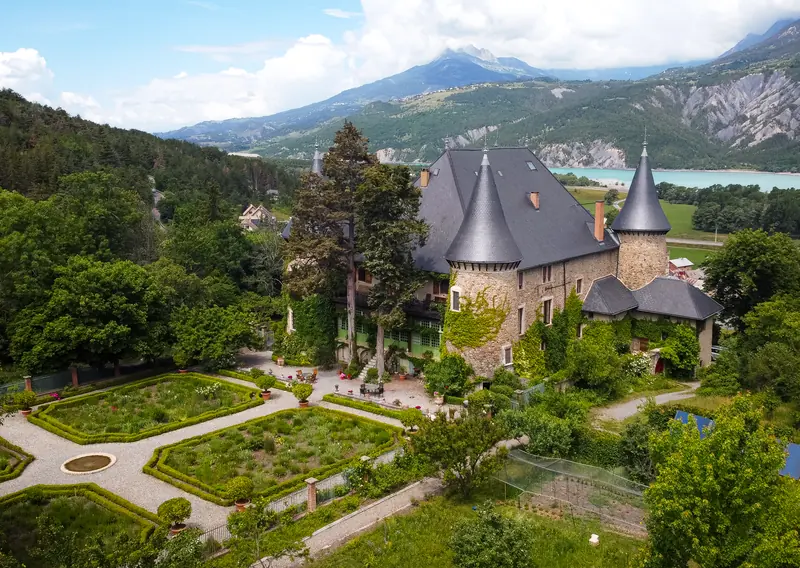
Your guide takes you from the château’s origins to its rebirth, restored from 1999 to 2003. You watch the film of the restoration, see the finest rooms, then stroll through the gardens.
And you hear the testimony of Joachim, a floor-layer at Picomtal in the 19th century, found under the floorboards during the last restoration.

- Duration
- About 90 minutes
- On the programme
- History, restoration film, drawing rooms and gardens
- Price
- €12, free for children under 10
When to come?
Guided tours run from May onwards. In 2026, they took place from 5 June to 6 September, and every Tuesday, Friday and Sunday at 11 am in July and August.
No need to book: just arrive 10 minutes before the start. The dates for the 2027 season will be announced on this page.
Outside these dates, groups of at least 10 adults can book a tour from early May to early October.
 Four years of work in 13 minutesThe restoration film, English version, on YouTube (opens in a new tab)
Its history
From watchtower to guest house
-
Around 1080
A lordship is born
Driven out of Châteauroux, the lords of Embrun withdraw to the parish of Saint-Jean and build a wooden keep there. The lordship of Les Crottes is born, and the village of Crots will grow at its feet.
-
13th century
The stone tower
A stone keep replaces the wooden one: today’s Boniface Tower. It was entered by ladder.
-
14th century
The square castle
The Embrun family build a square castle with four towers, with a kitchen and a vaulted stable on the ground floor.
-
1507
The Renaissance
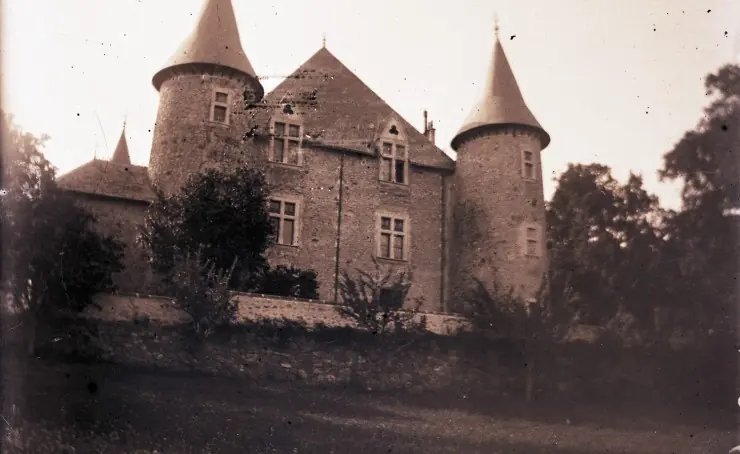
Martin de la Vilette, heir to the Embrun family, remodels the whole château and doubles its size: two new towers rise on the terrace. The French-style beamed ceilings date from the end of that century or the start of the next.
-
1692
The fire
In August, the Duke of Savoy’s troops burn part of the château. The charred beams found in 1999 still bear witness to it.
-
19th century
The avenue and the veranda
The Berthe family, who already own Boscodon Abbey, buy the château. The present avenue is laid out and the Louisiana-style veranda is built, shaded by two Virginia junipers that still stand today.
-
1876
Today’s face
Joseph Roman, a lawyer, mayor of Les Crottes and member of the Institut de France, buys the château and gives it much of its present-day look. Isabelle Roman d’Amat paints the chapel between the late 19th and the early 20th century.
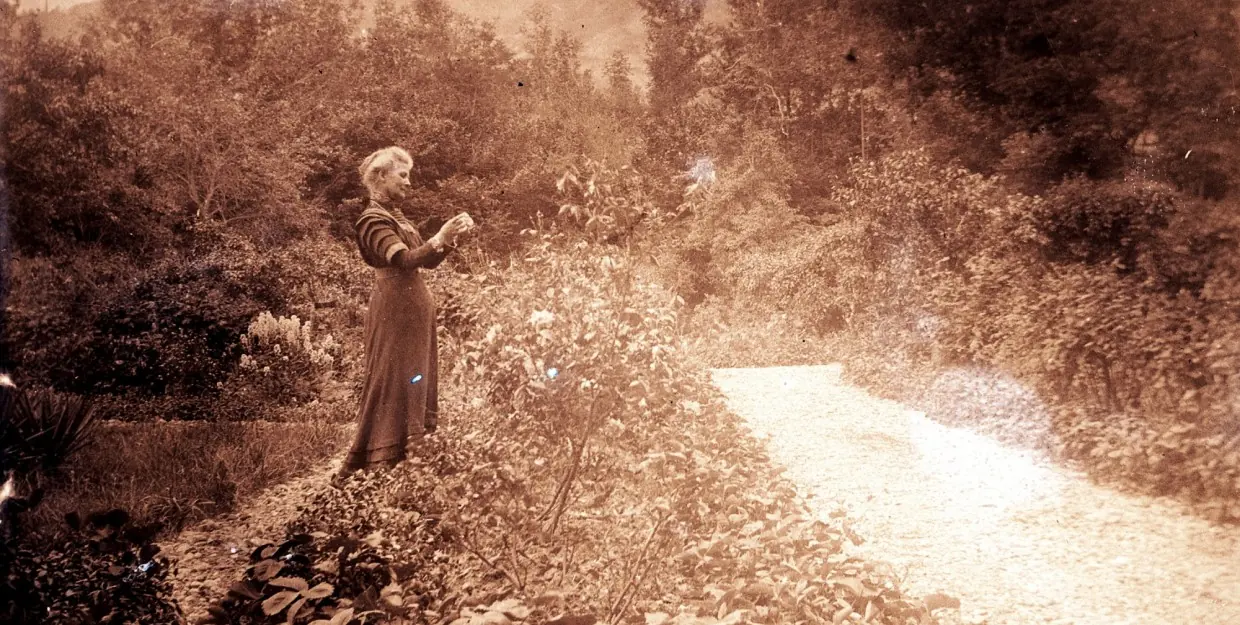
Isabelle at Picomtal, around 1900 -
1989
A historic monument
The château, its terrace and its former garden are listed as historic monuments.
-
1998
The rebirth
After a century of neglect, Jacques and Sharon buy the château from the Roman d’Amat family. They restore it from 1999 to 2003, and the garden comes back to life along with it. In 2016, the words of Joachim, a 19th-century floor-layer, are found under the floorboards.
The secrets under the floor (in French) (opens in a new tab)
-
Today
A château full of life
Nine guest rooms, tours, concerts, dinners and weddings: the château has welcomed guests again.
Inside
Drawing rooms still living in the 19th century
The entrance hall, the lounge, the Lions’ room, the music room, and the chapel with its painted vaults. You discover them on the tour; our overnight guests wander through them at leisure.
The garden
A formal French garden that reveals itself step by step
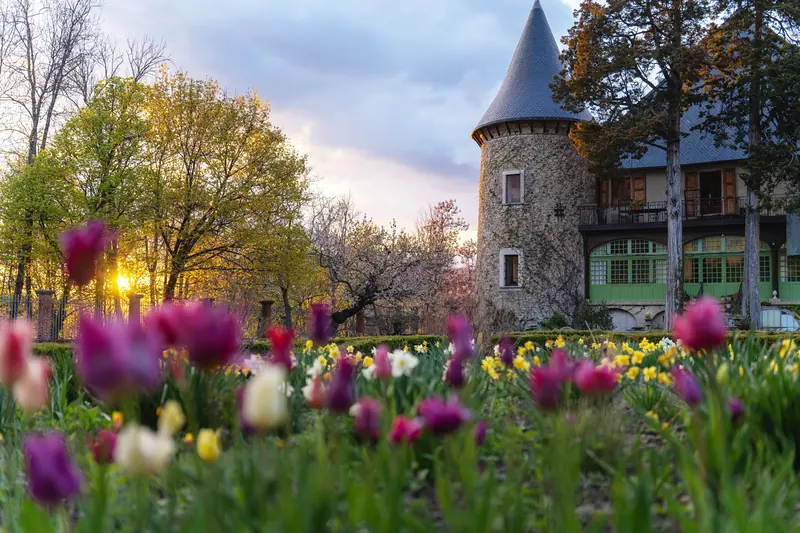
Restored at the end of the 20th century, the garden unfolds as you stroll: box-edged flower beds, pools and fountains, a cobbled path, the forecourt, an orchard and a peaceful pond.
Its plants were chosen to withstand hot, dry summers as well as cold winters. In spring, tulips light it up.